
Article: How to Choose the Best Sleeved Bib for Your Baby or Toddler

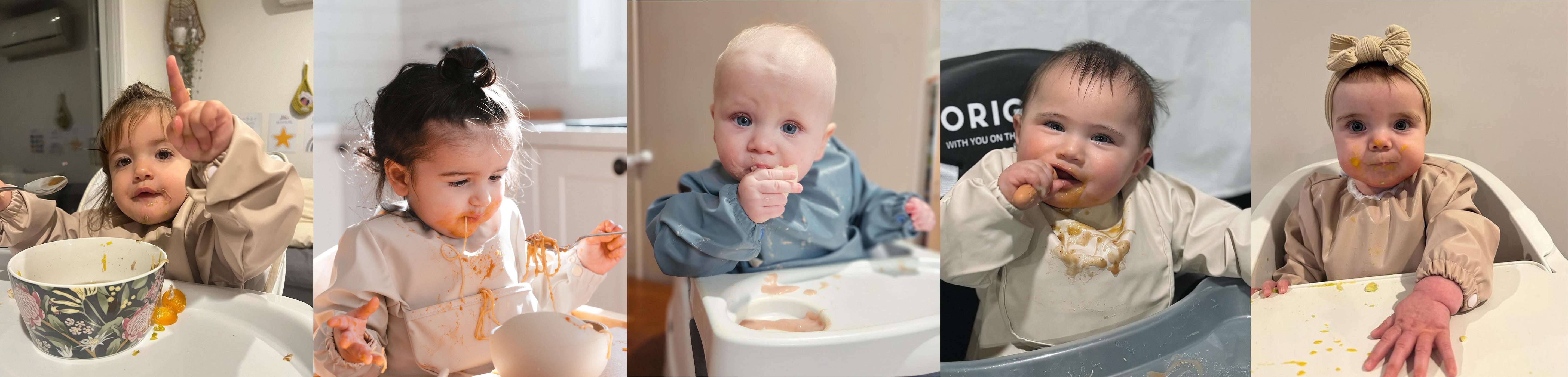
How to Choose the Best Sleeved Bib for Your Baby or Toddler
If you're here because you're a first-time parent and you're about to start baby-led weaning, prepare yourself. The mess is next level - it's hard to believe something so tiny and cute is capable of such carnage.
Or maybe you're here because you're a seasoned parent, and you're just tired of changing your little ones' clothes after every meal.
You've probably already realised - the answer to all your problems is a sleeved bib. With the right smock, you won't have to change their outfit after meals or scrub food stains out of their clothes any longer.
In this article, we'll show you everything you need to know about choosing the right sleeved bib for your baby or toddler. Not all sleeved bibs are created equal, so we'll talk you through what to look out for and how to avoid the generic rubbish bibs that don't actually do what they are supposed to do.
Firstly, What Are Sleeved Bibs?
Sleeved bibs are full-coverage garments designed to protect babies' and toddlers' clothes during mealtimes. They are normally made from waterproof or water-resistant materials and can also be called long-sleeve bibs, smocks, or cape bibs. Unlike regular bibs, sleeved bibs provide extended coverage. Key benefits include:
- Comprehensive protection from the mess: A well-made sleeved bib covers the child's torso, arms and legs.
- Promotes self-feeding: With less worry about mess, babies can freely explore food, helping their development. This means they are an excellent tool if you choose to do baby-led weaning.
Benefits of using a smocked bib - and what to watch out for
Sleeved bibs are a game-changer if you're dealing with a messy eater - both at home or when you’re out and about.
If you choose the right bib, the extra coverage provided by the sleeves means your little ones' clothes will actually stay clean. Saving you time and effort on constant outfit changes and the frustration of constantly scrubbing stains.
Using a bib with sleeves is particularly helpful in the colder months when your baby is wearing long-sleeved tops or cozy knits that are more difficult to clean. But quite honestly, if you hate mess, using a full coverage bib makes life a lot easier year-round.
If you're doing baby-led weaning (where your baby explores and self-feeds and creates a tonne of mess), getting a sleeved bib is a no-brainer.
Numerous studies show that allowing your little one to embrace the mess can promote independence, self-feeding skills, and a positive mealtime experience for your baby. Not having stains all over the clothes definitely makes it a better experience for you.
If you choose a bib that can be wiped clean and that has full coverage, you can significantly reduce the amount of laundry that you have to do, since you can get multiple uses out of it before running it through the washing machine.
So here's your first watch out: some bibs require you to wash them after every meal. These include bibs made from terry towelling, cotton, or even some made from nylon or PUL, which can stain. Depending on your preferences and washing schedule, you may either like this, or not.
Let's talk about food-catching pockets.
Here's your second watch-out moment: many bibs claim to have a food-catching pocket. However, if the pocket is at the bottom of the bib, it doesn't actually do much.
Sleeved bibs with a chest-height pocket are the most effective for new eaters, as the pocket actually catches the bulk of the mess (and they drop A LOT). It is also super helpful when your baby is learning to drink from an open cup, eating soup, puree, yoghurt, cereal or any meal that contains a lot of liquid.
You should also check to see if the pocket is fully lined, as most aren't. If the pocket is only lined on one side, it means the unlined side can quickly get mouldy.
Some cheap mainstream bibs are stitched through the middle of the pocket, presumably so they can be used to store paintbrushes for art? It boggles my mind, as all it does is make the pocket extremely difficult to clean. Since you can't flip it inside out, food ends up trapped inside.
All necklines are the same, right? ....Nope.
The third watch-out: most sleeved bibs are stock-standard bibs imported directly from China and white-labelled with the brand's logo. They have no custom features and are designed for older babies. Because of this, they sit too loose around the neck. This means that you will be constantly adjusting the bib, pulling it back, double bibbing, or generally getting frustrated because the food is getting down the neck and staining your baby's collar.
To prevent this, you need to look for a smock with multiple horizontal dome settings and stretch (like Kubaii!), or a velcro closure. Dome settings alone without the stretch will not give you as good a fit. And vertical dome closures (one on top of the other) don't help with this issue at all.
The fourth watch-out is regarding the length of the bib, and whether or not they have any splits in the fabric. Most bibs sit short, ending at the waist. This provides zero leg coverage, and after most meals you'll need to change your baby's pants. If you choose a bib with extra length, you'll thank me later.
Some sleeve bibs have a split at the front, claiming they sit better in the high chair. Here at Kubaii, we did vigorous testing of this type of design when we first designed our bibs, and we found that having a split actually performed worse in terms of protection. The split simply provided another access point for liquids in particular to get through to dirty the pants. It sounds clever in theory, but in reality it doesn't live up to expectations.
If you've yet to buy a high chair, I would definitely recommend choosing one that has a gap for the bib to pass through. This will make your life much easier.
Types of sleeved bibs available
There are a wide range of sleeved bib options available with varying levels of quality. You tend to get what you pay for in terms of quality.
Fabric types:
-
Nylon
This type of fabric is common in low-quality sleeved bibs. They come in many different colours and styles and are generally the cheapest bibs on the market. Nylon bibs are lightweight and dry quickly. They perform best if you wash them after every use, as frequent wiping can create holes in the lightweight fabric. -
PUL
This is a type of material commonly used in cloth nappies. It is water resistant, but not fully waterproof. The benefit of having a sleeved bib made from PUL is that there are many different designs available, which can be really cute. But the trade-off is that it is likely to stain and needs to be washed in the washing machine. It is also not as effective at keeping your baby clean, as liquids can seep through the fabric. Thicker PUL bibs are generally slower to dry after washing. For these reasons, we’d recommend avoiding bibs made from PUL. -
Terry towelling/nylon mix
These sleeved bibs are great at quickly absorbing puree and milk/liquid. They dry quickly but require washing after each use and cannot be wiped clean. If not washed effectively, they can stain. -
PU
This is a high-quality, 100% waterproof fabric that can be wiped clean with a damp cloth, or run through the washing machine. Sleeved bibs made from PU are the most effective at keeping your baby's clothes clean, however, the thicker material does take longer to dry after washing than other fabric types.
Styles:
-
Traditional sleeved bibs
These are generally short and cover your baby’s top only. They are the most common style of sleeved bib and the cheapest. -
Extra long, sleeved bibs
There are not too many extra long, sleeved bibs on the market, however, Kubaii bibs have been specially designed to meet this gap in the market. They protect the entire outfit, including your baby’s leggings. -
Coverall sleeved bibs
These bibs are designed to cover both the high chair tray and the child. They are good at keeping pants clean and dry. These bibs are very large and best used with a high chair as they may be too bulky when out and about.
Factors to consider when choosing a sleeved bib
When selecting the best sleeved bib for your little one, there are several key factors to consider to ensure a comfortable and effective fit.
Type of material
One of the most important aspects is the material. Opt for materials that are long-lasting, waterproof, and easy to clean. Avoid bibs with stiff or scratchy materials that could irritate the skin, waterproof materials that touch the skin on the inside of the bib, or cheap materials that will wear out quickly.
Functionality
If you want your bib to prevent liquid or puree dripping down, choose a sleeved bib with a terry towelling front, or a chest-height food catcher pocket.
When looking at pocket bibs, it’s important to choose one that is easy to clean. Kubaii pockets are double-lined so they can be flipped inside out and easily wiped clean.
Easy-to-clean
If you want your bib to be easy to clean, decide if you'd rather put it through the washing machine after each use, or if you want to be able to wipe it clean.
If you prefer to wash your bib after every use, you will want to choose a lightweight fabric that dries quickly.
If you want to be able to wipe the bib clean after each meal and wash it less frequently, then you should choose a bib made from durable 100% waterproof PU fabric.
The fit
Another crucial factor to consider is the size and fit of the bib. Ensure that the sleeves are sufficiently long to cover your baby's arms and that the bib is long enough to provide coverage from neck to legs.
Consider that in the winter months, your baby may be wearing thicker knits or jerseys. A well-fitting bib will not only keep your little one clean but also prevent any discomfort or restriction of movement during mealtime.
Look for bibs with adjustable features, such as dome or velcro closures, to accommodate your baby's growth and maintain a snug fit. It's helpful if the arms are adjustable so you can shorten or lengthen them as your baby grows.
The fit of the cuffs is also important. You want to look for a sleeved bib that has an elasticated cuff that sits snugly around the wrist and isn’t too loose or too tight. There’s nothing more frustrating than puree smearing up the arm due to a poor-fitting bib. Kubaii sleeved bibs have domes on the elasticated cuffs that allow you to tighten or loosen as required.
Type of closures
Consider the type of adjustable closure you prefer. Velcro vs tie vs snap closure.
- Velcro is quick and easy to use, however, it tends to lose its stick over time and get caught on other items in the wash.
- Ties can be fiddly and easily come undone.
- Dome snaps are a more durable solution, and are more difficult for your baby to simply pull off - which is ideal when you want to keep them clean. Kubaii bibs have necklines with multiple dome settings so the bib can grow with your little one.
Versatility and portability
Some sleeved bibs like coveralls, are designed only for use in a high chair. Others are more versatile and can be used when out and about - especially if they come with a free wet bag for storage when on the go, like the Kubaii bibs. Some sleeved bibs double up to make fantastic art smocks too.
Aesthetics
Finally, the design and style of the sleeved bib is also part of your decision. Consider bibs with colours and designs that match your aesthetic.
Cleaning and maintenance tips for sleeved bibs
Many sleeved bibs can be machine-washed. To prevent stains, you want to look for sleeved bibs that can be washed in a warm setting rather than cold only.
For bibs with stubborn stains, a quick pre-treatment before washing will help. Rub the affected area with laundry bar soap, then rinse before placing the bib in the washing machine and washing it with your general laundry.
Some general tips on effective stain removal are:
- Ensure your machine is correctly loaded for effective agitation.
- Use a good quality detergent with enzymes.
- Use heat, and long cycles where possible. It’s important to choose a bib that is designed to withstand a warm wash and won’t shrink or discolour.
- For more advice on laundry, the Clean Cloth Nappies website is an amazing resource for every new parent, whether or not you are using cloth nappies.
Drying
Air-drying is the safest way to dry your smock bib to preserve its integrity. If your bib features velcro or hook closures, secure them before washing to prevent damage to the fabric or other items in the load.
Whichever bib you choose, ensure you dry it thoroughly before storing, to prevent mould.
Discover Kubaii
Designed in New Zealand, Kubaii bibs are of premium quality. They are carefully designed to ensure the best fit and protection for your little ones' clothes. The no-gap neckline is one of the standout features. Many of our customers say they are the best sleeved bibs they've tried and wish they had discovered Kubaii bibs sooner.
Check out our range of extra-long, 100% waterproof, sleeved bibs here. Available in both pocket and non-pocket varieties.
Leave a comment
This site is protected by hCaptcha and the hCaptcha Privacy Policy and Terms of Service apply.